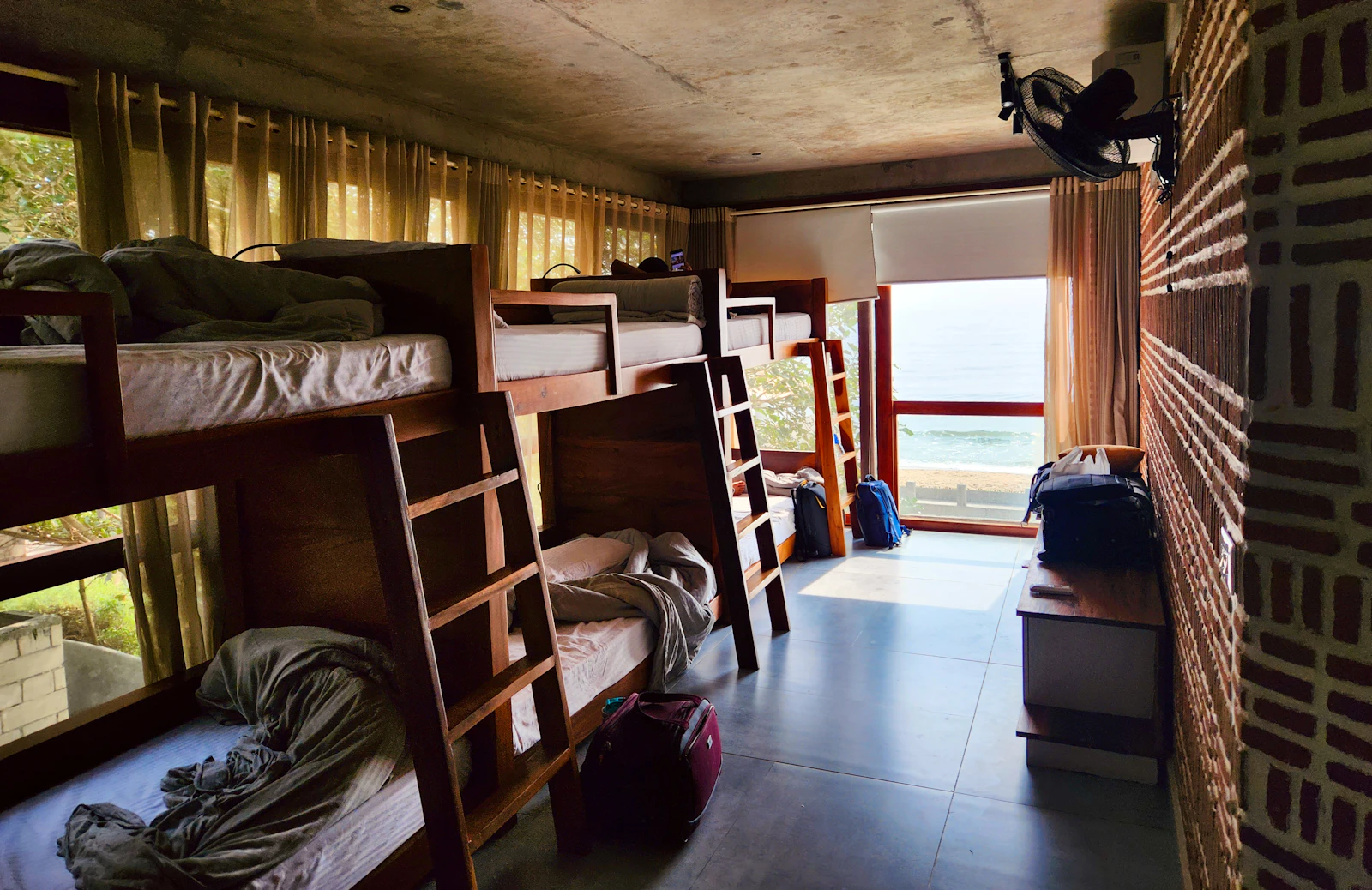
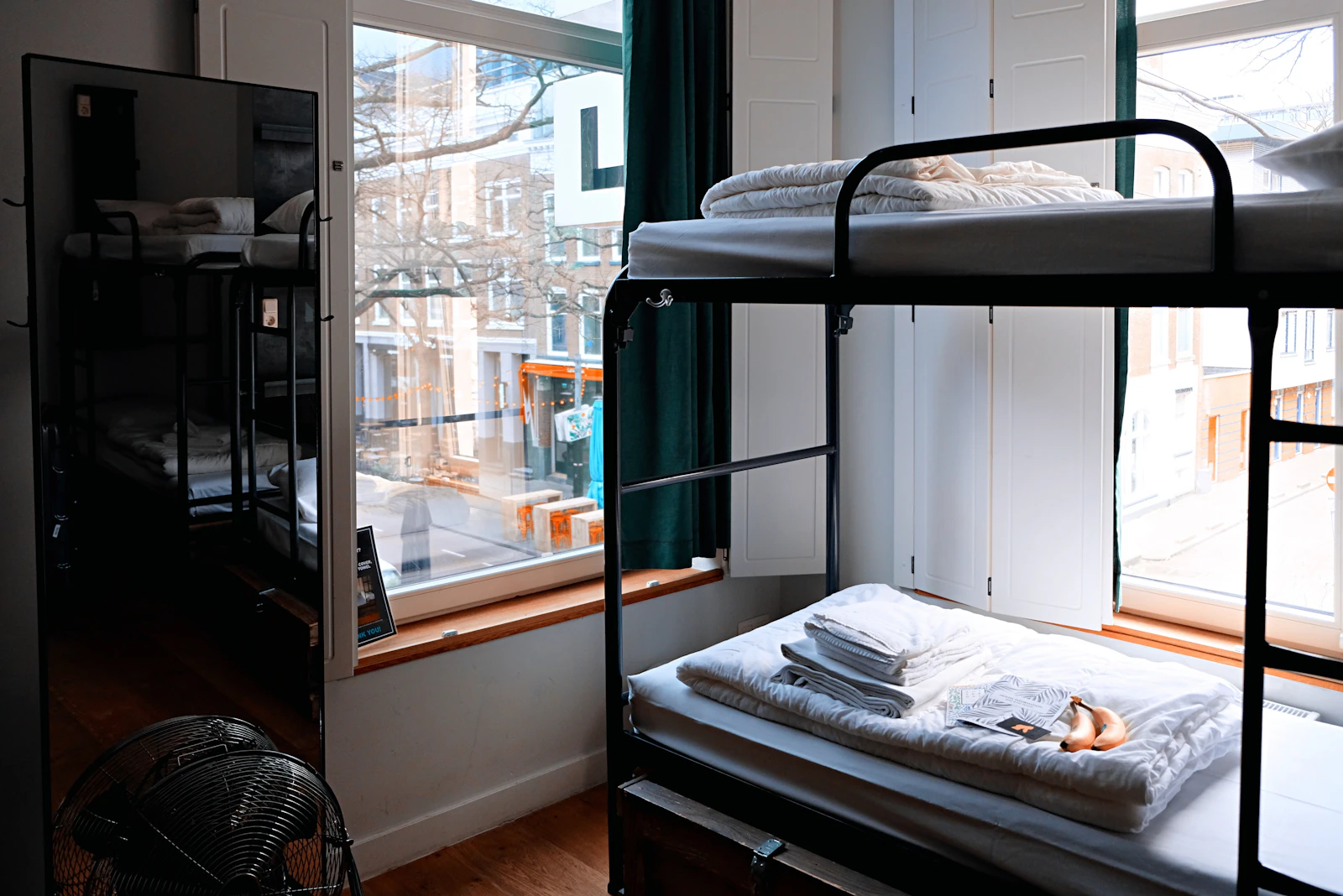
Six travellers who have never met, sharing one eight-bed dorm, each on their own dates and their own bill — on the same board as your private rooms.
SEE IT IN ACTION
A bed rides the same availability, pricing, billing and housekeeping machinery as a private room.
OVERVIEW AND BENEFITS
Beds are inventory, not a special case
A bed is an ordinary room row grouped into a physical unit that carries the bed count. That single decision is why dorm beds get availability guards, rate plans, folios and housekeeping tasks on day one rather than a parallel system.
Mixed properties, one board
Private rooms and dorm beds sit side by side, filtered and sold from the same screens.
Every bed bills independently
Each bed is its own party and folio, so six strangers settle six bills without touching each other.
Capacity that actually holds
A dorm cannot be given more beds than the physical room takes, enforced when the bed is created.
WHY IT MATTERS
Hostels are not small hotels
The unit of sale is different, the unit of billing is different, and the housekeeping rhythm is different. A room-shaped system makes an operator fake all three.
1guest per bed, enforced
0parallel systems to reconcile
1board for beds and private rooms
Illustrative figures — replace with measured results before publishing.
PRODUCT DETAILS
Built for shared accommodation
The pieces a hostel needs, expressed in the same model your private rooms already use.
Physical units
The shared room a set of beds lives in, carrying the floor and the bed-count limit.
Bulk bed creation
Mint a whole dorm in one request with a numbering prefix and a rate per bed.
Per-bed pricing
Every bed is born with a nightly rate row, so it is bookable from the moment it exists.
Summed party capacity
Four guests across four beds is allowed; the capacity check sums the selection rather than demanding one bed sleep four.
Board grouping
Beds render grouped under their dorm with an occupied-of-capacity count.
Same housekeeping
Beds raise the same tasks, checklists and status flow as any other room.
Ships dormant, turns on when you need it
Every existing room type stays a room type. Nothing is migrated, nothing changes, until you deliberately create a dorm.
One switch on the room type:mark it as beds and its occupancy is forced to one guest.
Immutable once used:a type that already has rooms cannot be flipped, because there is no coherent state on the other side.
Restructure cleanly:create a new type and move rooms across, deliberately.
COMPARISON
Vestibel vs. a hotel-only PMS
Capability
Vestibel
Spreadsheets
Hotel-only PMS
Bed-level inventory
Private rooms and dorms on one board
A separate bill per bed
Bed count capped by the physical room
Party capacity summed across beds
CUSTOMER STORIES
“
Vestibel gave us one guest record across rooms, restaurant and spa — check-in time is down 40% and we stopped losing restaurant charges entirely.
Dinesh Weerakoon · General Manager, The Banyan House
Placeholder story — no customer-story content exists yet.
A 30-minute walkthrough with your rooms, rates and outlets — no slides.
FAQ
FAQ
Yes, and that is the normal case. Beds and private rooms are the same kind of record, so they share the board, the availability guard, the rate plans and the housekeeping flow.
Exactly like a room. Each bed opens its own party and folio, so guests sharing a dorm settle independently and can each charge the bar to their own bed.
The physical unit carries a hard bed count, checked under a lock when a bed is created. You cannot put nine beds in an eight-bed room, and lowering the capacity below the beds already in it is refused.
Yes. The capacity check sums the beds selected rather than requiring any single bed to sleep the whole party.