
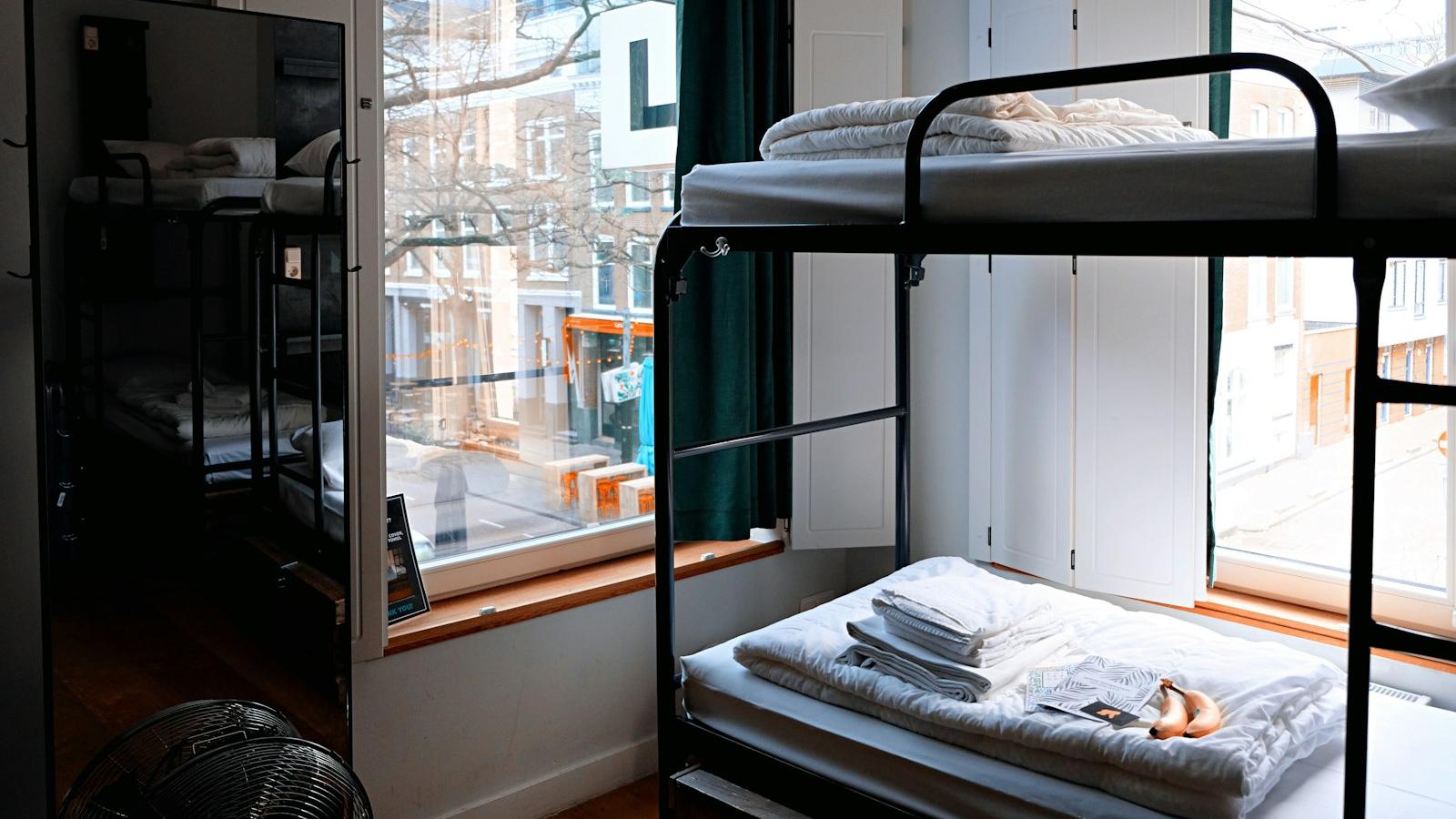
Eight beds in one dorm. On Friday six of them are sold: two travellers staying one night, three staying three nights, one staying a week. Different arrival dates, different rates, six separate bills, and none of them know each other.
A system that sells rooms cannot describe this. Properties work around it by creating eight fake "rooms" named 4A to 4H, which mostly holds together until somebody needs to know how many beds are free on Tuesday, or a guest asks to extend, or the housekeeping board shows eight rooms to service in a space that is one room.
The workaround also breaks the money. Six bills against one room means either one guest carries everyone's charges or the property invents a naming convention and reconciles by hand.
Treating a bed as a first-class unit of inventory — one that rides the same availability, pricing, billing and housekeeping machinery as a private room — is what makes the ordinary hostel night ordinary. Occupancy reads as beds. The bill belongs to the traveller. The dorm still appears once on the cleaning board.
Why this matters to you: mixed properties are increasingly the norm — a few private doubles alongside two dorms — and running them on two systems, or one system plus a spreadsheet, costs more in daily friction than either side of the business earns in margin.