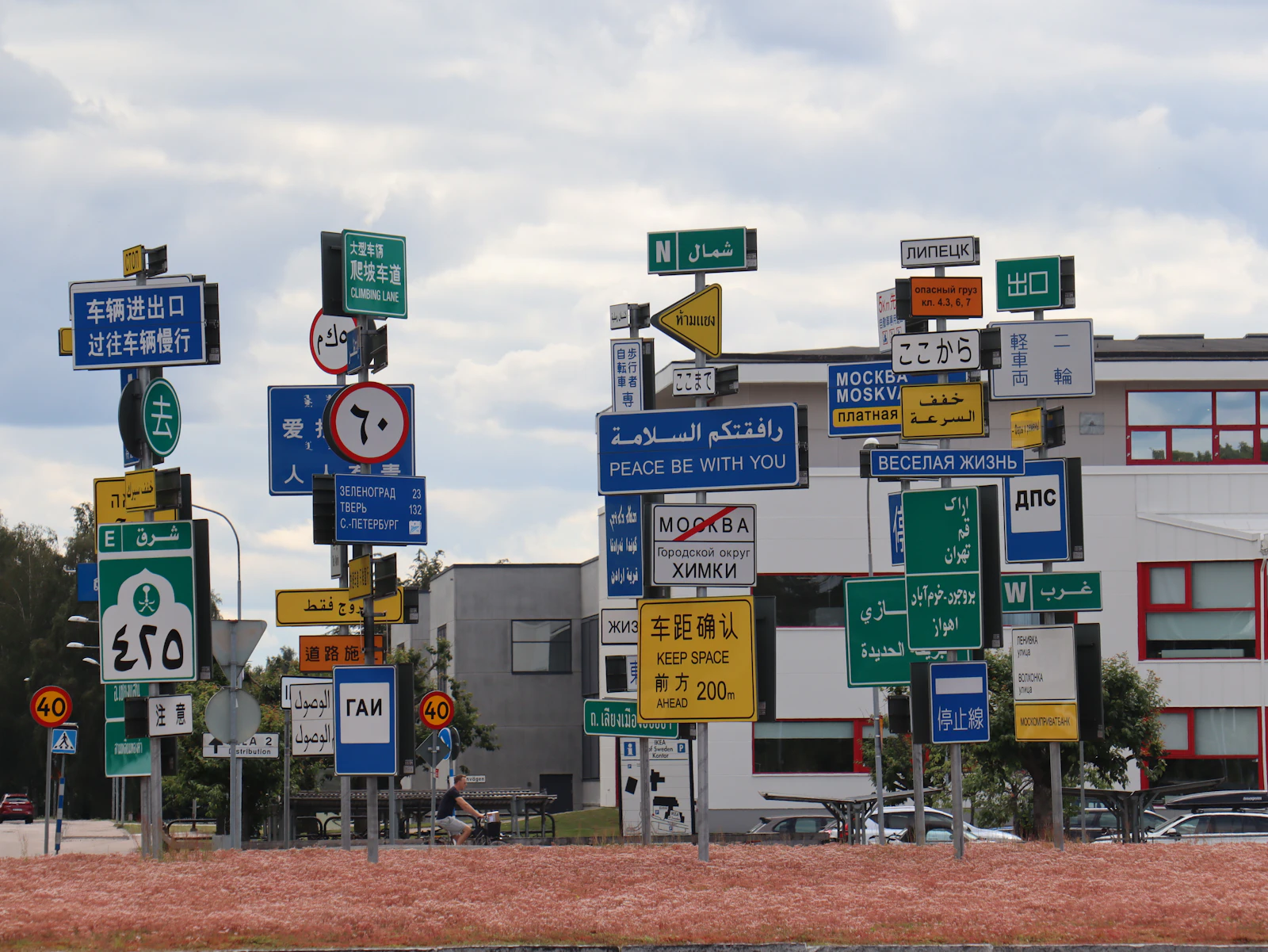
Your menu and your admin, in the language they arrived speaking
Two translation agents with different rules — one for guest-facing menu content, one for interface copy where a placeholder or a brand name must survive untouched.
SEE IT IN ACTION
Menu text and button labels are not the same translation problem, and they do not share an agent.
OVERVIEW AND BENEFITS
Two agents, because the constraints differ
Menu content can be translated freely. Interface copy cannot: placeholder tokens must come back verbatim, brand names and phone numbers must not be translated at all, and a button label has to stay short enough to fit its control.
Guests read the menu in their language
Menu content translates per locale and renders on the QR menu without a second catalogue.
Staff read the admin in theirs
Interface strings translate per locale, so a property can run its back office in the local language.
Verifiable, not assumed
Interface translations come back against the id they were sent with, so completeness is checked rather than hoped for.
WHY IT MATTERS
A half-translated screen is worse than an English one
Machine translation breaks interfaces in specific ways — a mangled placeholder, a translated brand name, a label that overflows its button. Handling that is most of the work, and it is why UI copy has its own agent.
2agents — menu content and interface copy
1catalogue behind every language
0placeholders lost in translation
PRODUCT DETAILS
What gets translated, and how it stays safe
Two agents, a missing-key capture loop, and graceful degradation when a batch cannot be parsed.
Buttons, labels, headings and empty states translated in batches, each returned against its own id.
Placeholder safety
Tokens inside a string are required to survive verbatim, so an interpolated value never breaks.
Brand names left alone
Product names and phone numbers are explicitly excluded from translation.
Missing-key capture
Strings that surface without a translation are recorded so they can be filled rather than silently shipped in English.
Graceful degradation
A batch that cannot be parsed falls back to the source language instead of rendering broken output.
Guest-facing and staff-facing are different jobs
Menu translation optimises for reading well. Interface translation optimises for not breaking — and the two agents are kept apart precisely so one set of constraints never leaks into the other.
Menu content:translated as prose, because a dish description should read naturally.
Interface copy:translated under constraints, with structured output so each string is traceable to its key.
Neither overwrites your work:a translation you have written yourself stays as you wrote it.
COMPARISON
Vestibel vs. a translation plugin
Capability
Vestibel
Browser translate
Manual
Menu content translated per locale
Interface strings translated safely
Placeholders and brand names protected
Missing strings captured for filling
No second catalogue to maintain
CUSTOMER STORIES
“
Vestibel gave us one guest record across rooms, restaurant and spa — check-in time is down 40% and we stopped losing restaurant charges entirely.
Dinesh Weerakoon · General Manager, The Banyan House
Placeholder story — no customer-story content exists yet.
A 30-minute walkthrough with your rooms, rates and outlets — no slides.
FAQ
FAQ
Because menu text and interface copy have different rules. UI copy must preserve placeholder tokens verbatim, must not translate brand names or phone numbers, and must stay short enough to fit its control. Menu content has none of those constraints.
No. Generated translations fill what is missing; wording you have set yourself is what the guest sees.
The surface falls back to the source language rather than rendering partial or broken output, and the missing key is recorded so it can be filled.
Translation is per target locale, so the languages you offer are the locales you enable for your property.